The retention shift happening right now and how to stay ahead of it.
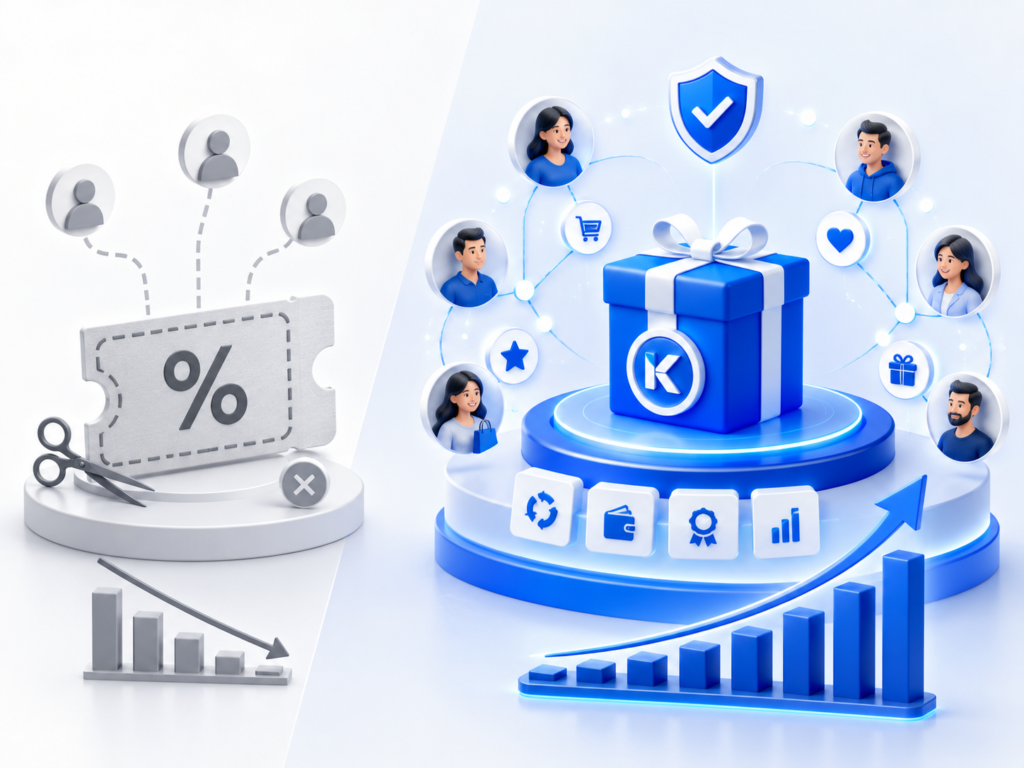
Coupons are easy to understand. A business offers a discount. A customer buys. The transaction is complete.
That simplicity is why coupons became so popular. They can help move inventory, attract attention, and encourage quick decisions. But coupons also create a problem that many businesses do not notice until later.
They train customers to wait.
When customers get used to discounts, they may stop buying at full value. They may only come back when there is a sale. Over time, the business becomes dependent on price cuts just to create movement.
That is not loyalty. That is discount dependency.
Kickbacks are different because they are built around value after the transaction.
Instead of only asking, “How much can we take off the price?” a Kickback asks, “What can the customer unlock by supporting this product, service, creator, membership, campaign, or community?”
That question changes everything.
A Kickback can include perks, access, rewards, utilities, member benefits, referral incentives, digital access, service-based value, exclusive experiences, or recurring benefits. The customer is not just receiving a cheaper price. They are receiving a reason to stay connected.
Coupons usually end at checkout. Kickbacks can continue after checkout.
This difference matters because customer retention is not built only through discounts. It is built through repeated value. When customers feel like they unlocked something useful, personal, exclusive, or ongoing, they are more likely to return.
A coupon says:
“Buy now because it costs less.”
A Kickback says:
“Support this and unlock value that continues.”
That is a stronger message.
For businesses, Kickbacks can also create better insight. With a standard coupon, it may be hard to understand what happened after the purchase. Did the customer return? Did they redeem anything? Did they share the offer? Did they feel connected to the brand?
With a structured Kickback, the business can track claims, redemptions, engagement, access, and customer activity. That gives the business a clearer picture of what actually drives people back.
Kickbacks also help businesses create offers that feel more premium. Instead of lowering the perceived value of a product or service, the business can increase the perceived value by attaching useful benefits.
For example, a brand could offer early access to future drops. A coach could offer a private session or exclusive resource. A service provider could offer a recurring maintenance perk. A community could offer member-only access. A product seller could attach a utility that gives the buyer a reason to return later.
This is why value wins.
Customers do not only want cheaper prices. They want to feel like they made a smart decision. They want to feel connected. They want to receive something meaningful. They want benefits that make the purchase feel bigger than the moment they paid for it.
That is where Kickback Contract fits.
Kickback Contract helps businesses, creators, and service providers build value-driven offers with verified access, redemption tracking, buyer education, utility management, and recurring engagement tools.
Coupons may still have a place. But they should not be the entire strategy.
If a business wants quick attention, a coupon may help.
If a business wants lasting connection, a Kickback is stronger.
Move beyond one-time discounts.
Use Kickback Contract to create value customers can unlock, redeem, and return for.
Ready to move beyond one-time discounts? Explore Kickback Contract pricing and choose the plan that helps you create verified value customers can return to, redeem, and remember.